
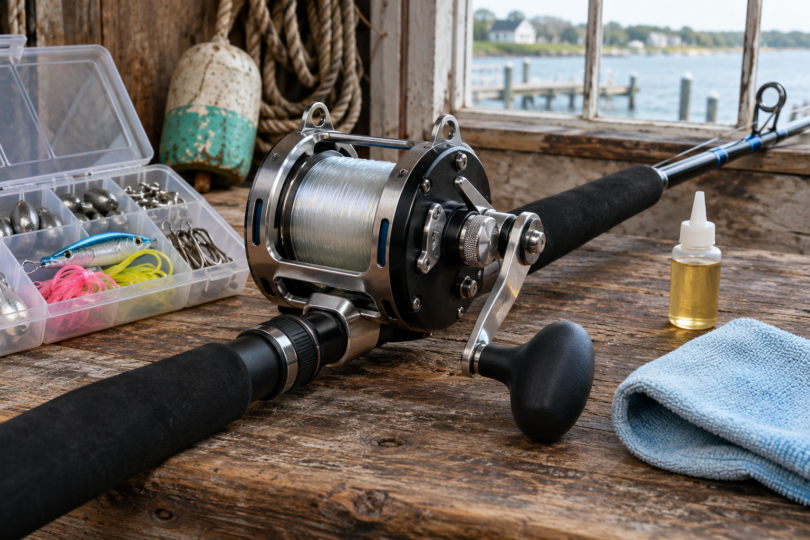

The boat is unloaded, the fish are put away, and the last thing you want is another chore. But before your saltwater tackle goes into the garage, give it a deliberate reset. A simple cleaning and inspection routine helps you find small problems while there is still time to fix them before the next trip.
For Alaska anglers, the useful question is not how shiny the reel looks. It is whether the whole outfit is ready to fish again: clean surfaces, dry storage, sound connections, and a short list of anything that needs attention. Start with your reel manufacturer’s instructions; sealed, conventional, spinning, and electric models can require different treatment.
Separate used tackle before unpacking
Set aside the hooks, leaders, lures, and tools that actually went into the water. Keep them out of the clean tackle supply until they have been cleaned and dried. A dedicated used-tackle container makes that habit easier on a busy boat. At home, empty it where loose hooks cannot catch a hand or fall within reach of children or pets.
Clean gently and let equipment dry
Use a gentle freshwater rinse on salt-exposed equipment, following the manufacturer’s directions. Avoid pressure washing or soaking reels: forcing water into a reel can carry contamination into its working parts. Wipe with a soft cloth and allow equipment to dry before packing it away. Texas Parks and Wildlife’s gear-care guide recommends this gentle approach for saltwater tackle.
PENN’s wash down instructions call for tightening the drag before a light freshwater spray, then drying the reel and loosening drag tension afterward. Treat that as manufacturer-specific guidance, not a substitute for the manual that came with your own model. Electric reels need their own instructions for batteries, connections, and seals.
Inspect while the tackle is in your hands
Look over rod guides, guide wraps, reel seats, and handles for visible damage. Check the working end of the line and leader, then inspect the hooks, snaps, and swivels you used. Put questionable items in a repair pile rather than back into a ready-to-fish compartment.
Make your notes specific. “Check reel” is easy to postpone; “handle feels rough under light retrieve” gives you or a service shop something concrete to investigate. Record the model, symptom, and trip date. If an outfit needs service, label it so it does not accidentally become someone’s first choice on the next outing.
Lubricate according to the reel manual
Use the lubricant and service points specified for that reel. Do not assume that a product suitable for one reel belongs on every bearing, seal, or drag system. If opening the reel exceeds your experience, routine external care and professional servicing are a better plan than an improvised tear down.
Store dry, then prepare for the next trip
Leave tackle trays open in a secure location until their contents are dry. Store cleaned rods and reels where they will not be crushed, knocked over, or pinched by a vehicle door. Follow the reel maker’s drag-storage instructions. Keep compatible soft plastics together in their original packaging rather than mixing unfamiliar materials.
Finish by replenishing the small things you used: leaders, hooks, a clean towel, and whatever your maintenance kit is missing. A tackle-care routine works best when it also becomes a packing routine. You should be able to distinguish ready equipment from repair projects at a glance.
A practical reset checklist
Separate used tackle → rinse gently → dry completely → inspect → follow model-specific lubrication instructions → store securely → restock. Keep that sequence beside your gear storage, and adapt it to the equipment you actually own.
For related offshore reading, explore our saltwater offshore fishing articles. Check current official regulations and marine conditions separately when planning any trip.
Sources and equipment guidance
Texas Parks and Wildlife: Fishing Gear Maintenance and Repair; PENN: Reel Maintenance. Consult your exact model’s manual before cleaning or servicing.
Prepared with AI assistance for Fishing Gods. Editorial review required before publication.